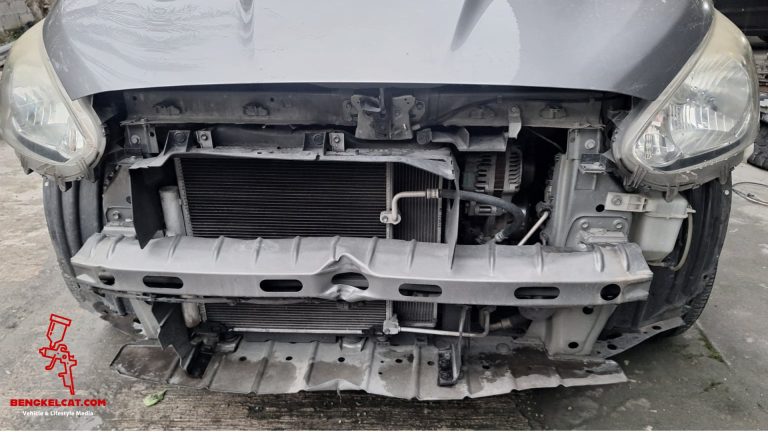
When a car experiences a front-end impact, the visible dents are often only part of the problem. One of the most critical areas to inspect is the radiator support, because this component directly affects the vehicle’s structure, alignment, and overall safety—often in ways drivers don’t immediately notice.
That’s why radiator support damage should never be judged based on appearance alone. A panel that looks “repairable” from the outside may still have hidden bends, weakened sections, or mounting issues that make repairs less reliable than they seem.
The right decision always depends on how severe the damage is, how the car is used, and how precise the structural condition needs to be.
What the Radiator Support Actually Does
The radiator support, in some areas people call it bull head panel sits at the very front of the vehicle’s body structure. It holds and stabilizes key components such as the radiator, headlights, and sometimes parts of the cooling and front-end assembly.
In practical terms, it’s not just a simple metal frame. It plays a crucial role in maintaining the geometry of the front body. When this area becomes compromised, the car may still run, but it may no longer perform as it should in terms of alignment, safety, and driving comfort.
Why This Part Matters So Much
A damaged radiator support can affect multiple systems at once:
- It can misalign the radiator and cooling components
- It can reduce the structural rigidity of the front end
- It can affect headlight positioning and panel gaps
- It can lead to improper hood alignment
- It can complicate future repairs if the structure is no longer accurate
That’s why radiator support damage should always be treated as a structural issue—not just a cosmetic one.
Common Causes of Radiator Support Damage
Damage to the radiator support usually happens for a clear reason. In most cases, it’s linked to impact or long-term wear.
1. Front-End Collisions
This is the most common cause. A strong frontal impact can push components backward and deform the radiator support structure.
2. Corrosion and Rust
Over time, moisture and poor maintenance can lead to corrosion, especially in older vehicles.
3. Improper Previous Repairs
Repairs that were done without proper alignment tools or measurements can weaken the structure and cause ongoing issues.
4. Engine Bay Modifications
Custom modifications or engine swaps that ignore proper mounting alignment can place stress on the radiator support.
Understanding the root cause of radiator support damage helps determine the most appropriate solution.
Can It Be Repaired, or Does It Need Replacement?
This is the most common question—and the answer depends on the severity of the damage.
If the damage is minor, body repair is often possible. Skilled technicians can straighten small bends, fix mounting points, remove rust, and restore the panel close to its original condition.
For vehicles with light impact damage, this is usually the most practical and cost-effective option.
However, if the radiator support is heavily bent, cracked, stretched, or poorly repaired in the past, replacement is often the smarter choice.
Trying to “save” a severely damaged structure can lead to long-term problems because it may never fully return to factory specifications.
Also Read: Function of Car Body Panels and Examples of Panels
Signs Repair May Still Work
Repair is typically feasible when:
- The damage is shallow and localized
- Mounting points are still aligned
- There are no major cracks or tears
- Rust is minimal and contained
- The surrounding structure remains straight
Under these conditions, a professional body shop can usually restore the component effectively.
Signs Replacement Is the Better Option
Replacement is usually the safer route when:
- The structure is pushed inward significantly
- The metal is torn or heavily creased
- Mounting areas for critical components are affected
- Previous repairs were poorly executed
- The car shows alignment or fitment issues
At this stage, radiator support damage is no longer ideal for repair, and replacement provides better long-term reliability.
What Happens During Repair or Replacement?
A proper repair involves more than simply reshaping metal. Technicians must measure the structure precisely and ensure everything returns to correct alignment.
Typical Repair Process:
- Straightening the frame
- Removing rusted sections
- Welding and reinforcing
- Sealing and repainting
- Checking component fitment
Replacement Process:
- Cutting out the damaged radiator support
- Installing a new panel
- Precision welding
- Rechecking alignment and spacing
- Reinstalling connected components
Because of this complexity, radiator support damage can become costly when it involves structural correction rather than simple cosmetic repair.
Price Guide: Original vs Aftermarket Parts
Cost is often a major factor in decision-making.
- Original (OEM) radiator support: around $250–$700
- Aftermarket radiator support: around $120–$350
- Labor (repair/replacement): around $150–$600
- Finishing (paint, welding, sealing): around $80–$300
A full replacement job may total between $400 and $1,300, depending on the vehicle and repair complexity.
For minor radiator support damage, repair costs can be significantly lower.
Repair vs Replacement: Which One Makes More Sense?
The best choice depends on the car’s condition—not just the budget.
- For newer or higher-value vehicles, replacement is often the better investment when structural damage is involved.
- For older cars with minor damage, repair may be sufficient and more economical.
Simple Decision Guide:
Choose repair if:
- Damage is minor
- Structure is still strong
- No alignment issues
- Budget is limited
Choose replacement if:
- Damage is severe
- Structural integrity is compromised
- Previous repairs were poor
- Long-term reliability is a priority
In many cases, radiator support damage requires proper measurement tools to make the right call—not just visual inspection.
How to Avoid Bad Repair Decisions
Choosing the cheapest option too quickly can lead to bigger problems later.
A low-cost repair might look fine initially but can result in:
- Vibration issues
- Misalignment
- Uneven panel gaps
- Premature rust
- Reduced safety
On the other hand, replacing a part unnecessarily can waste money.
The best approach is to request a proper inspection that includes:
- Structural measurement
- Rust and material condition check
- Mounting point evaluation
- Fitment inspection
- Written comparison between repair and replacement
This ensures radiator support damage is handled correctly from the start.
Also Read: Rust on Cars: How to Fix and Prevent It
Conclusion
The radiator support is not a component you can afford to overlook. It plays a key role in structural integrity, alignment, and safety.
In minor cases, repair can be a practical and cost-effective solution. But when the damage is severe—especially when it affects alignment or mounting points—replacement is usually the safer and more reliable option.
OEM parts offer better fit and consistency, while aftermarket options can be more affordable but vary in quality.
In the end, the smartest decision isn’t always the cheapest—it’s the one that restores the vehicle properly, keeps it safe, and ensures long-term performance after the repair is completed.