
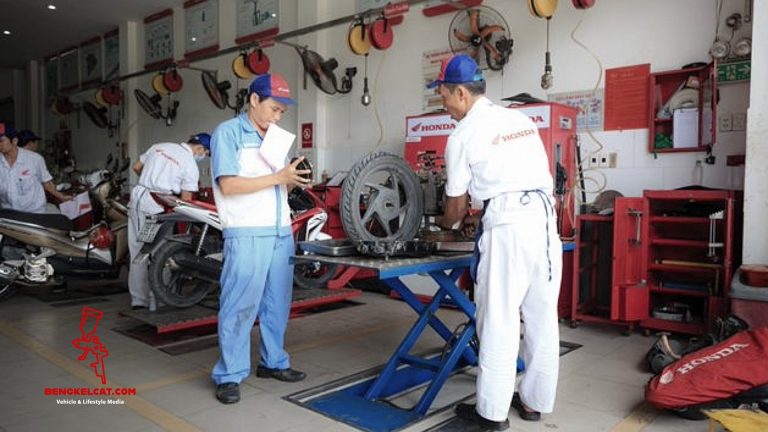
The automotive repair industry is far more complex than many people realize. From the outside, an auto repair shop may appear to be a place where technicians simply repair damaged vehicles, replace parts, and perform maintenance services.
In reality, a successful workshop operates through a well-organized system in which every employee has specific responsibilities and a clear reporting line.
As the automotive industry becomes increasingly competitive, repair shops are expected to provide fast service, accurate diagnostics, excellent customer experiences, and efficient operations.
Achieving these goals requires more than skilled mechanics. It demands a structured organization that allows employees to collaborate effectively.
An organized workshop minimizes confusion, reduces operational errors, and improves productivity. Employees understand who they report to, what tasks they are responsible for, and how their work contributes to the overall success of the business.
The importance of an effective Auto Repair Shop Organizational Structure can be seen in both small independent garages and large collision repair centers.
Regardless of company size, a clear hierarchy enables smooth communication and better decision-making.
This article explores the organizational structure commonly found in auto repair shops, the duties of each position, and the chain of command that keeps operations running efficiently.
Understanding the Importance of an Auto Repair Shop Organizational Structure
Every business needs a system that defines authority, responsibility, and communication channels. An auto repair shop is no exception.
Without an organizational structure, employees may duplicate tasks, ignore responsibilities, or experience communication breakdowns.
This often leads to delayed repairs, dissatisfied customers, and financial losses.
A well-designed organizational system provides several advantages:
- Clear reporting relationships
- Faster decision-making processes
- Better coordination among departments
- Improved customer satisfaction
- Greater accountability
- More efficient use of resources
- Easier employee evaluation and training
In many repair facilities, the organization resembles a pyramid. Leadership begins at the top and operational tasks flow downward through various levels of management and technical staff.
The chain of command generally follows this order:
Owner or Director
↓
General Manager or Shop Manager
↓
Department Supervisors
↓
Service Advisors and Administrative Staff
↓
Lead Technicians
↓
Technicians and Helpers
Each level plays an essential role in maintaining productivity and ensuring that repair jobs are completed according to quality standards and deadlines.
A properly implemented Auto Repair Shop Organizational Structure also creates opportunities for career growth.
Entry-level employees understand the path toward promotion and can develop their skills accordingly.
Typical Hierarchy in an Auto Repair Shop
Although organizational structures differ depending on workshop size and specialization, most repair facilities follow a similar hierarchy.
1. Owner or Business Director
The owner sits at the highest level of authority.
In small repair shops, the owner often participates in daily operations and interacts directly with customers.
In larger businesses, the owner focuses on long-term strategies and delegates operational management to professional managers.
The primary responsibilities of the owner include:
- Setting company vision and goals
- Determining business strategies
- Managing investments and financial planning
- Approving major expenditures
- Monitoring company performance
- Building relationships with suppliers and partners
- Expanding business opportunities
The owner has ultimate responsibility for the success or failure of the company.
Every department ultimately reports to the owner either directly or indirectly.
2. General Manager or Shop Manager
The shop manager serves as the operational leader of the workshop.
This position acts as the bridge between the owner and employees.
A manager ensures that every department works efficiently and that the company’s objectives are achieved.
Typical responsibilities include:
- Managing daily operations
- Setting productivity targets
- Monitoring service quality
- Supervising employees
- Handling major customer complaints
- Managing operational budgets
- Implementing company policies
- Recruiting and training staff
The shop manager is often responsible for balancing customer expectations with operational capabilities.
For example, if a repair center handles approximately 40 vehicles per week, the manager must ensure that manpower, equipment, and spare parts are sufficient to meet deadlines.
The success of an Auto Repair Shop Organizational Structure often depends heavily on the competence of the shop manager because this position coordinates almost every business function.
3. Department Supervisors
Larger repair facilities usually divide operations into specialized departments.
These departments may include:
- Mechanical repair
- Body repair
- Paint department
- Spare parts department
- Customer service department
- Administration and finance
Each department is typically led by a supervisor.
The supervisor’s responsibilities include:
- Assigning daily tasks
- Monitoring employee performance
- Maintaining productivity standards
- Reporting operational issues
- Training new staff
- Managing work schedules
- Ensuring workplace safety
Supervisors act as middle managers who translate company policies into practical actions on the workshop floor.
Because they work closely with employees, supervisors often identify problems before they become serious operational issues.
Duties and Responsibilities of Front Office Positions
The front office is the first point of contact between customers and the repair shop.
A professional front office team creates positive impressions and improves customer trust.
Service Advisor
The service advisor is one of the most important positions in modern repair shops.
This employee functions as the communication bridge between customers and technicians.
Responsibilities include:
- Greeting customers
- Listening to customer concerns
- Creating repair estimates
- Explaining repair procedures
- Scheduling appointments
- Providing progress updates
- Delivering completed vehicles
- Managing customer complaints
A service advisor must possess both technical knowledge and communication skills.
Customers often do not understand mechanical terminology. Therefore, service advisors must explain technical issues in simple language.
In many successful workshops, service advisors significantly influence customer satisfaction and repeat business.
Customer Service Representative
Some larger facilities separate customer service responsibilities from technical consultations.
The customer service representative focuses on:
- Handling inquiries
- Managing appointments
- Answering telephone calls
- Sending reminders
- Processing customer feedback
- Coordinating online bookings
- Maintaining customer databases
Excellent customer service can greatly improve the reputation of a repair shop.
Studies in service industries consistently show that satisfied customers are more likely to return and recommend businesses to others.
Receptionist
The receptionist performs essential administrative duties, including:
- Welcoming visitors
- Managing waiting areas
- Recording customer information
- Preparing documentation
- Organizing files
- Handling basic administrative tasks
Although often overlooked, receptionists contribute significantly to creating an organized and professional work environment.
Technical Positions and Their Duties
Technical staff form the operational backbone of every repair shop.
Without skilled technicians, even the most sophisticated management system cannot succeed.
Lead Technician or Foreman
The lead technician serves as the technical leader of the workshop.
This position combines practical repair skills with leadership responsibilities.
Key duties include:
- Assigning repair jobs
- Supervising technicians
- Providing technical guidance
- Inspecting repair quality
- Diagnosing complex problems
- Training junior employees
- Monitoring productivity
- Enforcing safety procedures
The foreman reports directly to the shop manager or department supervisor.
At the same time, technicians report to the foreman regarding daily repair activities.
The effectiveness of an Auto Repair Shop Organizational Structure often relies on competent foremen because they connect management decisions with technical execution.
Mechanical Technician
Mechanical technicians perform repair and maintenance tasks on vehicles.
Their responsibilities include:
- Engine repairs
- Brake servicing
- Suspension repairs
- Steering system maintenance
- Electrical diagnostics
- Air conditioning repairs
- Preventive maintenance
- Vehicle inspections
Modern technicians must continuously update their knowledge because vehicle technologies evolve rapidly.
Today’s technicians often use computerized diagnostic equipment that requires both mechanical expertise and digital skills.
Auto Body Technician
Auto body technicians focus on structural and cosmetic repairs.
Responsibilities include:
- Repairing damaged panels
- Replacing body components
- Straightening frames
- Welding operations
- Measuring vehicle dimensions
- Installing replacement parts
- Preparing surfaces for painting
Collision repair requires precision because structural inaccuracies can compromise vehicle safety.
Even minor measurement errors can affect driving performance and customer satisfaction.
Automotive Painter
The automotive painter is responsible for restoring vehicle appearance.
Key duties include:
- Surface preparation
- Mixing paint materials
- Applying primer
- Performing color matching
- Painting vehicle panels
- Polishing surfaces
- Conducting quality inspections
Professional painters need artistic abilities and technical skills.
Accurate color matching often determines whether customers perceive a repair as high quality.
Technician Helper or Apprentice
Entry-level employees often begin as helpers or apprentices.
Their duties include:
- Preparing tools
- Cleaning work areas
- Assisting technicians
- Organizing spare parts
- Moving vehicles
- Learning repair procedures
- Maintaining equipment
Apprentices gain practical experience and gradually develop into qualified technicians.
This position represents the starting point of career progression within the organization.
Administrative and Support Positions
An auto repair shop cannot function solely through technical personnel.
Administrative staff ensure that business operations remain organized and financially healthy.
Administrative Officer
Administrative officers manage office activities.
Their responsibilities include:
- Preparing reports
- Maintaining records
- Managing documentation
- Monitoring attendance
- Filing invoices
- Coordinating communication
- Supporting managers
Accurate administration helps management make informed decisions and maintain legal compliance.
Finance and Accounting Staff
Financial management is critical for business sustainability.
Finance personnel are responsible for:
- Recording transactions
- Managing payroll
- Processing invoices
- Monitoring expenses
- Preparing financial statements
- Handling taxes
- Managing budgets
- Tracking profitability
Even busy workshops can struggle financially if accounting practices are poor.
Therefore, finance staff play an important strategic role.
Spare Parts Officer
The spare parts department directly affects repair efficiency.
Responsibilities include:
- Managing inventory
- Ordering parts
- Monitoring stock levels
- Negotiating with suppliers
- Maintaining inventory records
- Ensuring part availability
- Preventing stock shortages
If parts are unavailable, repair jobs can be delayed for days or even weeks.
A well-managed inventory system significantly improves productivity.
Chain of Command in an Auto Repair Shop
A clear chain of command eliminates confusion and ensures accountability.
The reporting structure generally follows this pattern:
Owner
↓
General Manager or Shop Manager
↓
Department Supervisors
↓
Lead Technician or Foreman
↓
Technicians and Apprentices
Meanwhile, administrative and customer service departments usually report directly to the shop manager.
The flow of information also follows this hierarchy.
For example:
A technician identifies a problem.
↓
The foreman evaluates the issue.
↓
The supervisor reviews the operational impact.
↓
The manager makes strategic decisions.
↓
The owner receives reports when necessary.
This process ensures that decisions are made by the appropriate authority level.
A properly designed Auto Repair Shop Organizational Structure prevents employees from bypassing procedures or creating unnecessary conflicts.
It also improves communication efficiency and accountability.
How Organizational Structure Changes as a Repair Shop Grows
Small repair shops often operate with only a few employees.
One person may handle multiple responsibilities.
For example:
The owner may act as manager.
The service advisor may perform administrative duties.
The technician may also order spare parts.
As the company grows, specialization becomes increasingly important.
A medium-sized repair shop may employ:
- One owner
- One manager
- One service advisor
- One foreman
- Four technicians
- One painter
- One administrative officer
- One parts officer
Large collision repair centers may employ dozens of workers and multiple management layers.
As businesses expand, the Auto Repair Shop Organizational Structure must also evolve to maintain operational efficiency.
Adding specialized positions improves productivity and allows employees to focus on their expertise.
Growth without organizational adjustments often results in confusion, communication failures, and declining service quality.
Building an Effective Auto Repair Shop Team
An organizational chart alone does not guarantee success.
The people within the structure determine whether the system functions properly.
Successful repair shops typically emphasize:
Clear job descriptions.
Continuous employee training.
Performance evaluations.
Open communication.
Leadership development.
Career advancement opportunities.
Fair compensation systems.
A healthy workplace culture encourages collaboration and reduces employee turnover.
Managers should regularly review organizational effectiveness and adjust responsibilities as business needs change.
The automotive industry is evolving rapidly through electrification, digital diagnostics, and advanced driver assistance systems.
Consequently, workshops need employees who are adaptable and willing to learn new technologies.
A flexible organizational structure allows businesses to respond quickly to industry changes and customer demands.
Conclusion
An auto repair shop is much more than a place where vehicles are repaired.
It is a complex organization that relies on coordinated teamwork, defined responsibilities, and efficient communication.
A well-planned Auto Repair Shop Organizational Structure establishes clear reporting relationships, improves productivity, and enhances customer satisfaction.
From the owner and shop manager to technicians and administrative personnel, every position contributes to the success of the business.
Understanding the duties of each role and maintaining a clear chain of command enables repair shops to operate efficiently and grow sustainably.
Whether managing a small independent garage or a large collision repair center, implementing an effective Auto Repair Shop Organizational Structure creates a strong foundation for operational excellence, employee development, and long-term business success.