A vehicle’s paint is more than just color—it is a layered system designed to protect, enhance, and preserve the car’s appearance over time. Among these layers, one of the most crucial yet often overlooked is the clear coat.
Many car owners admire the glossy finish of a new vehicle without fully understanding what makes it look that way. So, What Is a Clear Coat, and why does it matter so much?
In simple terms, a clear coat is the transparent top layer applied over a car’s base color. While it may seem purely cosmetic, it plays a significant role in protecting the paint underneath from environmental damage and wear.
This article explores its definition, purpose, benefits, types, and maintenance, giving you a complete understanding of how it works and why it’s essential.
Understanding the Definition of a Clear Coat
To fully grasp What Is a Clear Coat, it helps to look at the structure of automotive paint. Modern vehicle paint systems typically consist of three main layers: primer, base coat (color), and clear coat. The clear coat sits on top as the final layer, forming a protective shield.
Unlike the base coat, which contains pigments and gives the car its color, the clear coat is completely transparent. Its main function is not to add color but to enhance depth and gloss while providing protection.
Key Characteristics of Clear Coat
Clear coat is formulated using advanced resins and polymers that harden after application. Once cured, it becomes a durable surface that resists minor scratches, UV radiation, and chemical exposure.
Here are some defining features:
- Transparent and glossy finish
- UV-resistant properties
- Chemical and oxidation protection
- Smooth surface for easier cleaning
- Enhances color depth and clarity
In modern vehicles, this layer is standard across nearly all manufacturers. Without it, paint would fade faster and lose its visual appeal much more quickly.
The Purpose of Clear Coat in Automotive Finishing
When discussing What Is a Clear Coat, it’s impossible to ignore its core purpose: protection and enhancement. This layer acts as a barrier between your car’s paint and the outside world.
Protection Against Environmental Damage
Cars are constantly exposed to harsh elements such as sunlight, rain, dirt, and pollutants. Over time, these factors can degrade the paint surface.
Clear coat helps by:
- Blocking harmful UV rays that cause fading
- Preventing oxidation of the base coat
- Acting as a shield against contaminants like bird droppings and tree sap
- Reducing the impact of minor abrasions
Without this protective layer, even high-quality paint would deteriorate rapidly, especially in hot and humid climates.
Enhancing Visual Appeal
Beyond protection, clear coat is responsible for the glossy, mirror-like finish seen on modern vehicles. It amplifies the color underneath, making it appear richer and more vibrant.
This visual enhancement is especially noticeable in metallic and pearl finishes, where light reflection plays a significant role in the overall look.
Supporting Long-Term Durability
A properly applied clear coat can extend the lifespan of automotive paint by several years. In many cases, a well-maintained clear coat can last between 5 to 10 years before requiring significant restoration.
This durability makes it a cost-effective solution for preserving a car’s appearance over time.
Benefits of Using a Clear Coat
Understanding What Is a Clear Coat also involves recognizing the practical advantages it provides. While it may seem like a thin layer, its impact is substantial.
1. Superior Paint Protection
The clear coat acts as the first line of defense against daily wear and tear. It absorbs minor scratches and prevents them from reaching the base color.
2. Improved Aesthetic Value
A glossy finish significantly enhances a vehicle’s overall look. Cars with well-maintained clear coats often appear newer and more attractive, even after years of use.
3. Easier Maintenance
The smooth surface created by the clear coat makes cleaning easier. Dirt, water, and contaminants are less likely to stick, reducing the effort required for regular washing.
4. Increased Resale Value
Vehicles with intact and glossy paint tend to have higher resale value. Buyers often associate good paint condition with proper maintenance.
5. Resistance to Fading and Oxidation
One of the most important benefits is protection against fading. Exposure to sunlight can cause paint to lose its color, but clear coat slows this process significantly.
Types of Clear Coat Based on Chemical Composition
To expand your understanding of What Is a Clear Coat, it is important to recognize the different chemical types used in automotive refinishing. Each type offers distinct performance, durability, and application characteristics.
1. NC (Nitrocellulose) Clear Coat
NC clear coat is one of the older types used in automotive finishing. It dries quickly and is relatively easy to apply, making it suitable for small repairs or classic restorations.
However, NC clear coat has several limitations:
- Lower durability compared to modern systems
- Less resistant to chemicals and weather
- Requires frequent maintenance
Because of these drawbacks, NC is rarely used in modern factory finishes but still appears in certain niche applications.
2. PU (Polyurethane) Clear Coat
PU clearcoat is the standard in modern industrial coatings for automotive paint. It offers superior durability, strong chemical resistance, and excellent gloss retention.
Key advantages include:
- High resistance to UV and weather
- Strong adhesion to base coat
- Long-lasting shine and hardness
Most professional body shops rely on PU systems because they provide consistent, high-quality results.
Also Read: Water-Based Paint vs Solvent-Based Paint for Cars
Mixing Ratios in Clear Coat Application
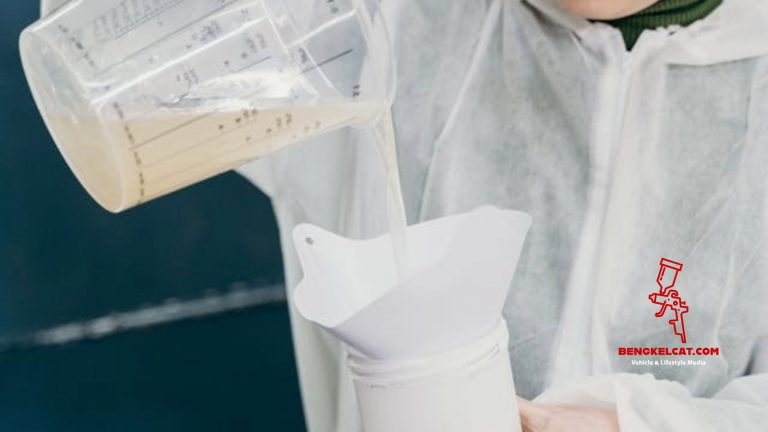
Another essential aspect when discussing What Is a Clear Coat is the mixing ratio. Clear coats are typically mixed with hardeners and thinners to achieve the correct viscosity and curing properties.
Common Mixing Ratios
4:1 Ratio
This means 4 parts clear coat to 1 part hardener. It is commonly used for:
- Faster curing
- Higher durability
- Professional-grade finishes
This ratio often produces a harder and more chemical-resistant surface.
2:1 Ratio
This consists of 2 parts clear coat and 1 part hardener. It is typically used for:
- Easier application
- Better flow and leveling
- Medium durability
Painters often choose this ratio for general repairs or when working in less controlled environments.
Some systems also include an additional thinner (e.g., 4:1:1), depending on temperature and spraying conditions.
Clear Coat Based on Solid Content
Solid content refers to the amount of actual material left on the surface after solvents evaporate. This directly affects thickness, durability, and gloss.
Medium Solid Clear Coat
Medium solid clear coats offer a balance between ease of application and performance.
Characteristics include:
- Easier to spray
- Moderate thickness
- Suitable for general repairs
They are often used in standard workshop environments where simplicity is important.
High Solid Clear Coat
High solid clear coats contain more resin and less solvent, resulting in a thicker and more durable layer.
Advantages include:
- Higher gloss and depth
- Better scratch resistance
- Fewer coats required
These are commonly used in premium refinishing jobs and high-end automotive work.
Clear Coat Finishes: Gloss vs Doff
When exploring What Is a Clear Coat, it’s also important to understand that not all finishes are shiny. Clear coats come in different finish types depending on the desired appearance.
Gloss Clear Coat
Gloss clear coat is the most common type used in automotive finishing.
Features include:
- High reflectivity
- Deep, wet-look finish
- Enhanced color vibrancy
This is the standard choice for most vehicles on the road today.
Doff (Matte) Clear Coat
Doff or matte clear coat provides a non-reflective, flat finish. It is increasingly popular in modern automotive styling.
Characteristics include:
- Low or no shine
- Unique and aggressive appearance
- Requires special maintenance
Unlike gloss finishes, matte clear coats cannot be polished in the same way, making care more delicate.
Also Read: What Is Car Paint Materials: Benefits and How It Works
Popular Clear Coat Brands in the Automotive Industry
To complete your understanding of What Is a Clear Coat, it helps to know some of the well-known brands used by professionals worldwide. These brands are recognized for their quality, consistency, and performance.
Premium Brands
- PPG Industries – Known for high-performance automotive coatings
- Axalta (formerly DuPont) – Offers advanced refinishing systems
- BASF (Glasurit, R-M) – Premium European paint technology
- Standox – High-end refinishing products used in luxury car repairs
Mid-Range and Popular Workshop Brands
- Nippon Paint – Widely used in Asia with reliable quality
- Kansai Paint – Strong presence in OEM and aftermarket coatings
- Sikkens – Trusted brand for professional refinishing
These brands offer various clear coat options, including PU systems, high solid formulations, and matte finishes.
How Clear Coat Is Applied
Another important aspect of What Is a Clear Coat is understanding how it is applied. The application process plays a critical role in determining the final result.
Surface Preparation
Before applying clear coat, the base coat must be clean, smooth, and free of contaminants. Any imperfections will be visible through the transparent layer.
Spraying Process
Clear coat is typically applied using a spray gun in controlled environments such as paint booths. Multiple thin layers are applied to achieve the desired thickness and finish.
Drying and Curing
After application, the clear coat needs time to cure. This process can take several hours to days, depending on the product and environmental conditions.
Proper curing ensures maximum durability and resistance.
Polishing and Finishing
Once cured, the surface may be polished to remove minor imperfections and enhance gloss. This step gives the paint its final showroom-quality appearance.
Common Problems and How to Prevent Them
Even though clear coat is durable, it is not immune to damage. Understanding potential issues helps you maintain it effectively.
Clear Coat Peeling
Peeling occurs when the bond between layers fails. This can result from poor application or prolonged exposure to harsh conditions.
Oxidation
Over time, clear coat can become dull and chalky due to oxidation. This is often caused by UV exposure and lack of maintenance.
Scratches and Swirl Marks
Improper washing techniques can create fine scratches that affect the finish’s clarity.
Prevention Tips
- Wash your car regularly using proper techniques
- Apply wax or sealant every 3–6 months
- Avoid parking under direct sunlight for extended periods
- Use microfiber cloths to prevent scratches
Taking these steps can significantly extend the life of your clear coat.
Maintenance and Care for Long-Lasting Results
If you truly understand What Is a Clear Coat, you’ll know that maintenance is key to preserving its benefits.
Regular Washing
Cleaning your car at least once every two weeks helps remove dirt and contaminants that can damage the surface.
Waxing and Sealing
Applying wax adds an extra layer of protection and enhances shine. Sealants and ceramic coatings can offer even longer-lasting protection.
Paint Correction
If the clear coat develops scratches or swirl marks, paint correction techniques such as polishing can restore its appearance.
Professional Detailing
Periodic professional detailing can help maintain optimal condition. Costs typically range from $100 to $300 depending on the service level.
Conclusion
By now, you should have a complete understanding of What Is a Clear Coat and why it plays such a vital role in automotive finishing. It is far more than just a glossy layer—it is a protective shield that preserves both the appearance and integrity of your vehicle’s paint.
From chemical types like NC and PU to mixing ratios such as 4:1 and 2:1, as well as variations in solid content and finish (gloss or doff), clear coat technology offers a wide range of options tailored to different needs.
When properly selected and maintained, a high-quality clear coat can keep your vehicle looking new for years while protecting it from everyday damage. Whether for professional refinishing or personal maintenance, understanding these details allows you to make smarter decisions and achieve better results.
Also Read: How Much Paint to Paint a Car