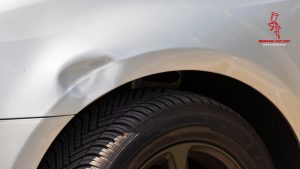

When your vehicle needs collision repair, one of the first questions you’ll face is whether to choose OEM or aftermarket body parts. The difference in price can be substantial, and the decision often impacts repair quality, insurance coverage, and long-term vehicle value.
Understanding the OEM vs Aftermarket Body Parts Cost is critical before approving any repair estimate. While OEM parts are often seen as the “gold standard,” aftermarket components can offer significant savings. The real issue is whether the higher price of OEM parts always translates into better value.
This guide explores the cost differences, performance factors, insurance implications, and real-world considerations to help you make a confident decision.

What Are OEM Body Parts?
OEM stands for Original Equipment Manufacturer. These parts are produced by the same manufacturer that made the original components installed on your vehicle at the factory.
Because OEM parts match the original design exactly, they are often marketed as the safest and most reliable option.
Exact Fit and Factory Standards
OEM body parts are built to precise specifications. This typically means:
- Accurate panel gaps
- Consistent paint adhesion
- Proper alignment with sensors and mounting points
In many cases, the OEM vs Aftermarket Body Parts Cost reflects this guaranteed compatibility.
Warranty and Brand Assurance
OEM components usually come with a manufacturer-backed warranty. This provides peace of mind, particularly for newer vehicles still under factory coverage.
However, that reassurance often comes at a premium price.
What Are Aftermarket Body Parts?
Aftermarket parts are manufactured by third-party companies rather than the original vehicle maker. These companies design parts to replicate factory specifications, but they are not produced by the brand itself.
Aftermarket components are widely used in collision repair, especially when insurance companies are involved.
Cost Advantage
The biggest appeal of aftermarket parts is affordability. Depending on the component, they may cost 20% to 50% less than OEM alternatives.
For example:
- OEM front bumper cover: $900 – $1,500
- Aftermarket bumper cover: $400 – $900
This pricing gap significantly influences the OEM vs Aftermarket Body Parts Cost comparison.
Quality Variation
Not all aftermarket parts are equal. Some manufacturers produce high-quality, certified components, while others focus primarily on cost reduction.
Certification programs such as CAPA (Certified Automotive Parts Association) help ensure certain quality standards, but differences may still exist.
Direct Cost Comparison: Real-World Examples
To understand the financial impact, let’s examine typical repair scenarios.
Fender Replacement
OEM fender:
- Part cost: $450 – $800
- Total installed cost: $1,200 – $1,800
Aftermarket fender:
- Part cost: $200 – $450
- Total installed cost: $800 – $1,200
Savings can range from $300 to $600 for a single panel.
Headlight Assembly
OEM LED headlight:
- $1,200 – $2,000
Aftermarket equivalent:
- $600 – $1,200
Advanced lighting technology can widen the price gap even further.
When comparing estimates, the OEM vs Aftermarket Body Parts Cost often shows substantial differences in multi-panel repairs.
Also Read: Dealership vs Body Shop Repair Cost
Fitment and Installation Differences
While cost savings are attractive, fitment accuracy matters.
Panel Alignment
OEM parts generally offer perfect alignment because they follow factory molds. This reduces installation adjustments.
Aftermarket parts may require minor modifications, additional labor, or repositioning to achieve proper fit.
Extra labor time can narrow the price gap in the OEM vs Aftermarket Body Parts Cost equation.
Paint Matching
Both OEM and aftermarket panels require painting in most cases. However, slight surface texture differences may affect final appearance.
A skilled body shop can minimize these issues, but quality workmanship becomes even more important when using non-OEM components.
Safety Considerations
Safety should always come first when replacing body parts.
Structural components such as reinforcement bars and crumple zones must meet specific strength requirements.
OEM parts are tested according to manufacturer crash standards. Aftermarket structural parts may not always undergo identical testing processes.
In minor cosmetic repairs, the safety difference may be minimal. But in structural repairs, the OEM vs Aftermarket Body Parts Cost comparison should prioritize occupant protection over savings.
Insurance Company Influence
Insurance providers often recommend or require aftermarket parts to reduce claim payouts.
In many states, insurers are legally allowed to specify non-OEM components unless the policyholder requests otherwise.
If you prefer OEM parts, you may need to pay the difference out of pocket. Therefore, understanding the OEM vs Aftermarket Body Parts Cost helps you evaluate whether the upgrade is financially worthwhile.
Vehicle Age and Value Considerations
The age of your vehicle plays a significant role in this decision.
New Vehicles (0–3 Years)
For newer vehicles, OEM parts may help preserve resale value and maintain factory warranty compliance.
In these cases, the higher OEM vs Aftermarket Body Parts Cost may be justified.
Older Vehicles (5+ Years)
For older cars with lower market value, investing in expensive OEM components may not be financially practical.
Aftermarket parts can restore functionality and appearance at a more reasonable cost.
Long-Term Durability
Durability depends heavily on manufacturer quality rather than the OEM label alone.
High-quality certified aftermarket parts can perform comparably to OEM parts in non-structural applications.
However, lower-grade aftermarket components may show:
- Premature rust
- Warping under heat
- Inferior mounting strength
The OEM vs Aftermarket Body Parts Cost should be viewed alongside expected lifespan.
Our Field Experience Observing Repairs
Over the years, our team has visited numerous collision repair facilities and reviewed side-by-side installations of OEM and certified aftermarket components. In many cosmetic repairs, visual differences were nearly impossible to detect after professional painting and alignment.
However, we also encountered cases where low-grade aftermarket panels required extensive adjustments, increasing labor costs and delaying delivery. Those real-world observations highlight that the OEM vs Aftermarket Body Parts Cost is not simply about part pricing—it’s about total repair efficiency and outcome quality.
When OEM Is Worth the Extra Cost
There are situations where paying more makes sense.
Choose OEM if:
- The vehicle is under factory warranty
- Structural components are involved
- Advanced sensors require precise calibration
- You plan to sell the vehicle soon
In these cases, the higher OEM vs Aftermarket Body Parts Cost may protect long-term value.
When Aftermarket Makes Financial Sense
Aftermarket parts are often practical when:
- Damage is cosmetic only
- The vehicle is older
- Budget is limited
- Insurance does not cover OEM upgrades
Certified aftermarket components can deliver solid performance at a reduced price.
Hidden Costs to Consider
Before making a decision, factor in additional expenses.
Labor adjustments for poor fitment can add $100–$300.
Sensor recalibration may be required regardless of part type.
Paint blending across adjacent panels increases material costs.
When calculating the true OEM vs Aftermarket Body Parts Cost, always review the full estimate—not just the part price.
Environmental Impact
Aftermarket manufacturing can sometimes reduce waste by using recycled materials. However, inconsistent production standards may affect longevity.
OEM parts require strict manufacturing processes that may consume more resources but ensure consistent performance.
Environmental impact may not be the primary decision factor, but it adds another layer to the OEM vs Aftermarket Body Parts Cost discussion.
Final Verdict: Is OEM Always Better?
OEM parts offer guaranteed compatibility, factory-level quality, and strong resale value protection. For new vehicles or structural repairs, they are often the safest bet.
However, OEM is not always the most economical choice. High-quality certified aftermarket parts can provide reliable performance at a significantly lower cost, especially for cosmetic repairs on older vehicles.
Ultimately, the OEM vs Aftermarket Body Parts Cost comparison depends on your vehicle’s age, repair type, budget, and long-term ownership plans. By carefully reviewing estimates, understanding part certification, and consulting with reputable repair professionals, you can make a balanced decision that protects both safety and finances.
Also Read: Auto Body Repair Cost in the US