
Automotive engineering is one of the most dynamic and technologically advanced fields in modern engineering. Vehicles today are no longer simple mechanical machines; they are complex systems that integrate electronics, software, materials science, and advanced manufacturing technologies. As a result, universities design comprehensive academic programs to prepare students for these evolving challenges.
Understanding the automotive engineering syllabus is important for anyone considering a career in the automotive industry. The curriculum outlines the core subjects, technical skills, and practical training required to design, develop, and improve modern vehicles. It also helps students understand how different engineering disciplines come together in automotive development.
In most universities, the automotive engineering syllabus spans four years for undergraduate programs. During this time, students study fundamental engineering concepts before moving into specialized automotive topics such as vehicle dynamics, powertrain systems, and automotive electronics.
This article explores the typical structure of an automotive engineering syllabus, including the core subjects, specialized courses, laboratory training, and industry-oriented projects that shape future automotive engineers.
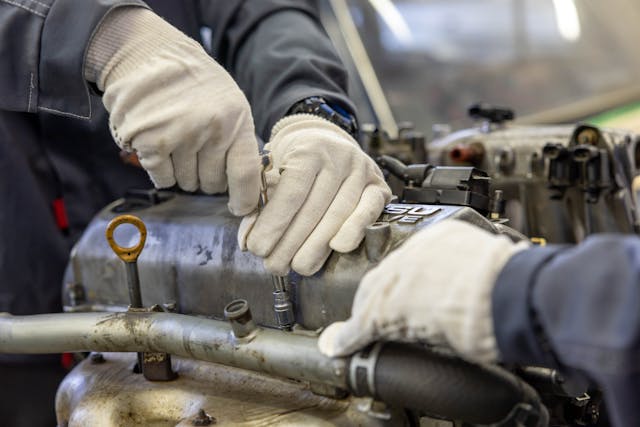
Overview of an Automotive Engineering Degree Program
Most universities structure their automotive engineering degree programs in a progressive format. Students begin with foundational engineering courses before moving into more advanced automotive subjects in later years.
The automotive engineering syllabus is designed to balance theoretical knowledge with practical experience. Early semesters usually focus on mathematics, physics, and basic engineering concepts. These subjects build the analytical skills necessary for understanding vehicle systems.
As students progress, the curriculum becomes more specialized. One of Technician Courses related to internal combustion engines, vehicle dynamics, automotive electronics, and manufacturing processes begin to dominate the program.
Engineering programs also include laboratory work, technical workshops, and group design projects. These activities help students apply theoretical concepts to real engineering problems.
By the final year, students typically complete a major project that involves designing or analyzing an automotive system. This project often simulates real-world engineering tasks found in the automotive industry.
Core Subjects in the Automotive Engineering Syllabus
The automotive engineering syllabus includes several fundamental engineering subjects that form the backbone of the program. These courses provide the scientific and technical foundation needed to understand complex vehicle systems.
Mathematics and Engineering Fundamentals
Mathematics plays a central role in engineering education. Students must develop strong analytical skills to solve technical problems related to vehicle design and performance.
Common mathematics courses include:
- Calculus
- Linear algebra
- Differential equations
- Engineering statistics
These mathematical tools allow engineers to model mechanical systems, predict vehicle behavior, and analyze performance data.
In addition to mathematics, students study engineering mechanics and thermodynamics. These subjects explain how forces, energy, and heat affect vehicle components.
Physics and Materials Science
Physics courses introduce students to the principles that govern motion, energy transfer, and mechanical systems. Understanding these principles is essential for designing efficient and reliable vehicles.
Materials science is another critical part of the automotive engineering syllabus. Engineers must understand how different materials behave under stress, heat, and environmental conditions.
Modern vehicles use a wide variety of materials, including:
- High-strength steel
- Aluminum alloys
- Carbon fiber composites
- Advanced polymers
Studying these materials helps engineers design lightweight yet durable vehicles that meet safety and performance requirements.
Mechanical Engineering Basics
Automotive engineering is closely related to mechanical engineering. As a result, students typically study several mechanical engineering subjects during their early semesters.
These courses include fluid mechanics, machine design, and mechanical vibrations. They provide the knowledge necessary to understand how engines, transmissions, and suspension systems function.
By mastering these fundamentals, students build the technical confidence needed to handle more specialized automotive subjects later in the program.
Specialized Automotive Engineering Courses
After completing the foundational subjects, students begin studying specialized automotive topics. These courses represent the core of the automotive engineering syllabus and focus directly on vehicle design and performance.
1. Internal Combustion Engines
Internal combustion engine courses explain how gasoline and diesel engines operate. Students learn about combustion processes, fuel injection systems, and engine performance optimization.
Topics typically include thermodynamic cycles, emission control technologies, and engine efficiency improvements.
Even though electric vehicles are becoming more popular, understanding combustion engines remains important because millions of vehicles worldwide still rely on this technology.
2. Vehicle Dynamics
Vehicle dynamics is one of the most exciting subjects in automotive engineering. This course examines how vehicles behave while accelerating, braking, and turning.
Students analyze factors such as tire grip, suspension design, weight distribution, and aerodynamics. These elements determine how stable and responsive a vehicle feels on the road.
Understanding vehicle dynamics is essential for designing safe and comfortable vehicles.
3. Automotive Electrical and Electronic Systems
Modern vehicles contain dozens of electronic control units and sensors. These components manage everything from engine performance to driver safety systems.
Because of this complexity, automotive electronics have become an essential part of the automotive engineering syllabus.
Students learn about:
- Automotive sensors and actuators
- Electronic control units (ECU)
- Vehicle communication networks
- Battery management systems
This knowledge prepares engineers to work on advanced vehicle technologies such as hybrid systems and intelligent driver assistance features.
4. Automotive Manufacturing Processes
Automotive engineers must also understand how vehicles are produced. Manufacturing courses focus on production techniques used in modern automotive factories.
Students learn about metal forming, welding processes, robotic assembly, and quality control systems.
These subjects help engineers design components that can be manufactured efficiently at large scale.
Laboratory Training and Practical Projects
Practical experience is a key part of engineering education. The automotive engineering syllabus includes laboratory training that allows students to apply theoretical concepts in real experiments.
Engineering laboratories may include engine testing facilities, materials testing equipment, and vehicle simulation software.
Students often work with dynamometers to measure engine power and efficiency. They may also use computer simulations to analyze vehicle performance under different driving conditions.
Hands-on training also includes design projects where students build prototype components or develop automotive systems.
Typical practical activities include:
- Engine performance testing
- Suspension system analysis
- Computer-aided vehicle design
- Automotive electronics programming
- Wind tunnel testing for aerodynamics
These projects strengthen problem-solving skills and help students develop confidence in real engineering environments.
Many universities also participate in student competitions such as Formula Student or Baja SAE. These competitions allow students to design and build race vehicles while working in multidisciplinary teams.
Participating in these projects provides valuable industry experience and enhances career opportunities.
Emerging Technologies in Automotive Engineering Education
The automotive industry is currently undergoing a major technological transformation. As a result, universities are updating the automotive engineering syllabus to include emerging technologies.
Electric vehicles are one of the most important developments in modern transportation. Many engineering programs now include courses focused on electric powertrains, battery technology, and charging infrastructure.
Autonomous driving is another rapidly growing field. Engineers working on self-driving vehicles must understand artificial intelligence, sensor fusion, and advanced control systems.
Connected vehicle technology is also becoming increasingly important. Modern vehicles communicate with other vehicles, infrastructure, and cloud networks to improve safety and traffic efficiency.
To prepare students for these changes, many universities include courses related to:
- Electric vehicle systems
- Battery technology and energy storage
- Autonomous vehicle control
- Artificial intelligence for mobility
- Advanced driver assistance systems (ADAS)
By including these subjects, the automotive engineering syllabus ensures that graduates remain relevant in a rapidly evolving industry.
Skills Students Develop During the Program
Beyond technical knowledge, automotive engineering education focuses heavily on professional skill development.
Engineering students learn how to analyze complex problems and develop practical solutions. They also gain experience working in multidisciplinary teams.
Some of the most valuable skills developed during the program include:
- Engineering problem solving
- Computer-aided design (CAD)
- Simulation and modeling
- Technical communication
- Project management
- Research and innovation
These skills are highly valued by automotive manufacturers, technology companies, and research organizations.
Graduates who master both technical and professional skills often find it easier to adapt to new technologies and industry challenges.
Career Opportunities After Studying Automotive Engineering
Completing a degree based on a well-designed automotive engineering syllabus opens the door to a wide range of career opportunities.
Automotive engineers work in vehicle design, manufacturing, testing, and research. They may focus on improving engine efficiency, designing electric powertrains, or developing autonomous driving systems.
Common career roles include:
- Automotive design engineer
- Powertrain engineer
- Vehicle dynamics specialist
- Automotive electronics engineer
- Manufacturing engineer
- Electric vehicle systems engineer
Many graduates also pursue careers in motorsports engineering, advanced mobility research, or sustainable transportation development.
Entry-level automotive engineers typically earn competitive salaries. In many regions, starting salaries range between $60,000 and $80,000 per year, depending on the company and location.
Engineers with experience in electric vehicles and autonomous technologies often earn significantly higher salaries due to the high demand for specialized expertise.
Conclusion
Automotive engineering is a multidisciplinary field that combines mechanical design, electronics, materials science, and advanced technology. A well-structured automotive engineering syllabus prepares students to understand and develop the complex systems used in modern vehicles.
Throughout their studies, students move from fundamental engineering principles to specialized automotive subjects such as vehicle dynamics, powertrain systems, and automotive electronics. Laboratory training, practical projects, and industry collaboration further strengthen their technical abilities.
As transportation technology continues to evolve, engineering education must also adapt. Modern programs now incorporate electric vehicles, autonomous driving systems, and intelligent mobility solutions into the automotive engineering syllabus.
For students passionate about vehicle technology and innovation, studying automotive engineering offers a challenging and rewarding path. With the right education and practical experience, graduates can play a key role in shaping the future of transportation worldwide.
Also Read: Automobile Engine Basic Knowledge