Modern vehicles rely on a complex network of components to deliver stability, comfort, and precise handling. Among these parts, the ball joint plays a critical yet often overlooked role.
Although small in size, it supports significant loads and enables controlled movement between suspension and steering components.
Understanding the Function of ball joint in suspension system is essential for anyone who wants to maintain vehicle safety and performance.
When a ball joint fails, steering becomes unstable, tire wear increases, and in extreme cases, wheel separation can occur.
This article explores how ball joints work, their structural design, their impact on vehicle dynamics, warning signs of failure, and maintenance strategies to ensure long-term reliability.
Understanding the Basic Role of a Ball Joint
To fully grasp the Function of ball joint in suspension system, it helps to compare it to a human joint.
Much like a hip or shoulder joint, a ball joint connects two components while allowing multi-directional movement.
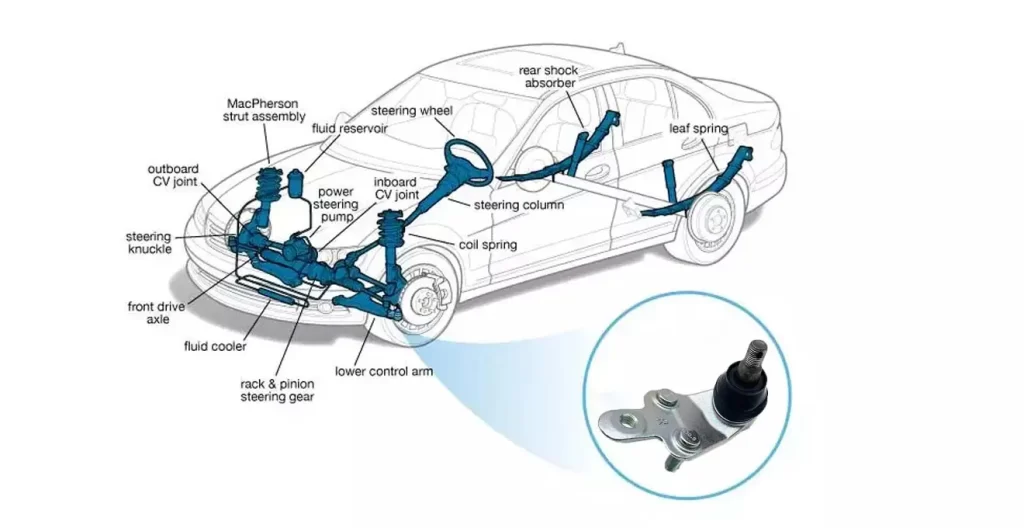
In a vehicle, the ball joint connects the control arm to the steering knuckle.
This connection allows the wheel to move up and down with the suspension while also turning left and right during steering.
Without this flexible pivot point, the suspension would not be able to absorb road irregularities effectively.
1. Enabling Vertical Movement
When driving over bumps or uneven surfaces, the suspension system compresses and rebounds.
The ball joint allows the steering knuckle to move vertically while staying securely connected to the control arm.
This ensures consistent wheel contact with the road surface.
2. Supporting Steering Rotation
In addition to vertical motion, the ball joint enables rotational movement.
As you turn the steering wheel, the knuckle pivots on the ball joint. This dual-axis movement is central to the Function of ball joint in suspension system.
The combination of flexibility and strength makes it a critical load-bearing pivot.
Types of Ball Joints in Modern Vehicles
Not all ball joints are identical. Different suspension designs require different configurations.
Understanding these variations further clarifies the Function of ball joint in suspension system across vehicle types.
Load-Bearing Ball Joints
Load-bearing ball joints support the weight of the vehicle while allowing movement.
These are typically found in suspensions where the coil spring sits on the lower control arm. The lower ball joint in this setup carries significant vertical force.
Because they bear constant load, these joints often wear faster than non-load-bearing types.
Non-Load-Bearing Ball Joints
In some suspension designs, the upper ball joint mainly controls steering geometry without supporting vehicle weight.
While they experience less vertical stress, they still endure rotational forces during steering.
Sealed vs. Serviceable Ball Joints
Modern vehicles commonly use sealed ball joints. These units come pre-lubricated and require no additional grease during their lifespan.
Older or heavy-duty vehicles may use serviceable joints equipped with grease fittings. Regular lubrication extends their operational life.
Each variation still fulfills the same essential Function of ball joint in suspension system, ensuring controlled and stable wheel movement.
How Ball Joints Affect Vehicle Stability and Handling
Vehicle handling depends heavily on precise wheel alignment and controlled suspension motion.
When evaluating the Function of ball joint in suspension system, stability becomes a key focus.
Maintaining Wheel Alignment
Ball joints help maintain proper camber and toe angles.
If a ball joint develops excessive play, the wheel can tilt or shift slightly. This leads to uneven tire wear and compromised steering accuracy.
Even small alignment changes can reduce tire lifespan by 20% to 30%.
Improving Steering Precision
A tight, properly functioning ball joint provides accurate steering response.
When wear develops, drivers may notice vague steering or delayed reaction when turning.
This loss of responsiveness reduces confidence at highway speeds.
Absorbing Road Shock
Although shock absorbers and struts handle most impact forces, ball joints also help manage suspension articulation.
Their ability to pivot smoothly contributes to ride comfort and reduced vibration.
Together, these factors highlight the dynamic Function of ball joint in suspension system beyond simple mechanical connection.
Signs of a Worn or Failing Ball Joint
Ball joints are durable but not permanent. Most last between 70,000 and 150,000 miles depending on driving conditions.
Recognizing early warning signs prevents costly repairs and potential safety hazards.
Here are common symptoms:
- Clunking noises when driving over bumps
- Steering wheel vibration
- Uneven tire wear
- Vehicle wandering or drifting
- Loose or unstable steering feel
Clunking or Knocking Sounds
A worn ball joint often produces a metallic clunk when the suspension moves.
This sound usually occurs over potholes or during sharp turns.
Uneven Tire Wear
If one side of the tire tread wears faster than the other, excessive ball joint play may be affecting alignment.
Tire damage is often the first visible symptom.
Steering Instability
In advanced cases, the steering may feel unpredictable.
Ignoring these signs compromises the Function of ball joint in suspension system and increases accident risk.
What Causes Ball Joint Failure?
Several factors influence ball joint longevity.
Understanding these causes provides insight into maintaining the Function of ball joint in suspension system effectively.
1. Lack of Lubrication
In serviceable joints, insufficient grease accelerates wear.
Friction increases inside the joint housing, leading to metal-to-metal contact.
2. Torn Protective Boot
Each ball joint is protected by a rubber boot that keeps dirt and moisture out.
If the boot tears, contaminants enter the joint and accelerate deterioration.
3. Harsh Driving Conditions
Frequent driving on rough roads, carrying heavy loads, or hitting potholes increases stress.
These impacts gradually loosen internal tolerances.
Regular inspection helps identify problems before complete failure.
Cost of Replacement and Maintenance
Ball joint replacement costs vary depending on vehicle type and labor complexity.
On average:
- Single ball joint replacement: $150–$350
- Both sides replacement: $300–$700
- Luxury or heavy-duty vehicles: may exceed $800
Although these costs may seem significant, they are far less expensive than repairing damage caused by complete joint failure.
In extreme cases, a failed ball joint can allow the wheel to collapse outward, causing suspension damage and towing expenses.
Maintaining the Function of ball joint in suspension system protects both safety and finances.
Inspection and Maintenance Best Practices
Preventive care significantly extends ball joint lifespan.
Drivers and technicians should inspect joints during routine service intervals.
Visual Inspection
Check for torn dust boots or grease leakage.
Any visible damage suggests contamination.
Physical Play Test
Technicians lift the vehicle and check for vertical or horizontal movement in the wheel.
Excessive play indicates wear.
Recommended Maintenance Steps
- Inspect ball joints during tire rotation
- Replace torn dust boots immediately
- Lubricate serviceable joints every oil change
- Schedule suspension checks annually
Following these practices preserves the Function of ball joint in suspension system over time.
Real-World Insights From Suspension Service Experience
Through direct coverage of suspension repair workshops and conversations with experienced mechanics, our team has observed that ball joint wear is frequently underestimated by vehicle owners.
In many cases, drivers initially report minor steering noise or slight tire wear. Upon inspection, technicians often discover significant joint looseness that could have led to major suspension failure if ignored.
This firsthand exposure reinforces how critical the Function of ball joint in suspension system truly is. Small symptoms often signal larger underlying mechanical issues.
Vehicles that receive regular suspension inspections consistently show longer component life and improved handling stability.
Ball Joints and Overall Suspension Performance
The suspension system operates as a unified network.
Control arms, bushings, shocks, struts, and ball joints must work together.
If one component fails, others absorb additional stress.
When evaluating the broader Function of ball joint in suspension system, consider its role as a structural pivot point.
Without it:
- Steering would lock or bind
- Vertical wheel travel would be restricted
- Alignment angles would collapse under load
In short, the suspension system could not function effectively.
Ball joints are engineered to withstand thousands of articulation cycles per mile. Their hardened steel construction and precision fit ensure durability under extreme forces.
Maintaining this component ensures balanced load distribution and predictable steering geometry.
Conclusion
The ball joint may be small compared to other suspension components, but its importance cannot be overstated.
By allowing simultaneous vertical and rotational movement, it enables smooth suspension travel and precise steering control.
It supports alignment stability, protects tire lifespan, and enhances overall ride comfort.
Neglecting ball joint maintenance can lead to uneven tire wear, steering instability, and potentially dangerous mechanical failure.
Understanding the Function of ball joint in suspension system empowers vehicle owners to prioritize inspections, recognize early warning signs, and schedule timely replacements.
With proper care and regular monitoring, ball joints can deliver reliable performance for many years, ensuring safe and stable driving in all road conditions.
Also Read: Function of Wheels in Vehicle Stability
Image & Source: What does a ball joint do?