For many drivers, the engine is often seen as the heart of a vehicle, but without a proper transmission, that power would be useless.
A car’s ability to accelerate smoothly, climb hills, or cruise efficiently on the highway depends heavily on how its transmission operates.
This is why a clear transmission system explained approach is essential for anyone who wants to truly understand how vehicles function.
The transmission is responsible for managing power delivery from the engine to the wheels. It adjusts torque and speed so the car can operate efficiently under different driving conditions.
Without this system, engines would stall at low speeds or suffer damage at high revolutions.
This article offers a complete and practical explanation of how a transmission system works.
It is designed for beginners, students, and everyday drivers who want a structured, easy-to-follow breakdown without unnecessary technical complexity.
The Purpose of a Transmission System
At its core, a transmission system controls how engine power is converted into usable motion.
Engines operate within a limited RPM range, while driving conditions demand constant changes in speed and torque. The transmission bridges this gap efficiently.
A proper transmission system explained discussion always starts with torque management.
Torque is the twisting force that moves the vehicle from a standstill. At low speeds, high torque is required, while at higher speeds, less torque is needed to maintain motion.
By using different gear ratios, the transmission allows the engine to stay within its optimal performance range.
This balance improves fuel efficiency, reduces engine wear, and provides smoother driving experiences.
Key Components of a Transmission System
Understanding individual components helps clarify how the system functions as a whole. Each part plays a specific role in managing power flow.
Gear Sets and Gear Ratios
Gears are the foundation of any transmission. Different gear sizes create different ratios, which affect how much torque and speed are delivered to the wheels.
Lower gears provide higher torque and are used for starting and climbing hills.
Higher gears reduce engine RPM at cruising speeds, improving fuel economy and reducing noise.
Clutch or Torque Converter
Manual transmissions use a clutch, while automatic transmissions rely on a torque converter.
Both components manage the connection between the engine and the transmission.
The clutch temporarily disconnects engine power during gear changes.
A torque converter, on the other hand, uses fluid dynamics to transfer power smoothly without direct mechanical contact.
Transmission Fluid
Transmission fluid lubricates internal components, cools the system, and enables hydraulic functions in automatic transmissions. Clean fluid is essential for longevity.
Most manufacturers recommend fluid replacement every 30,000 to 60,000 miles. Ignoring this can lead to overheating and costly repairs exceeding $3,000.
Types of Transmission Systems
Different vehicles use different transmission designs depending on performance goals, cost, and efficiency requirements.
A well-rounded transmission system explained guide must compare these types clearly.
Manual Transmission
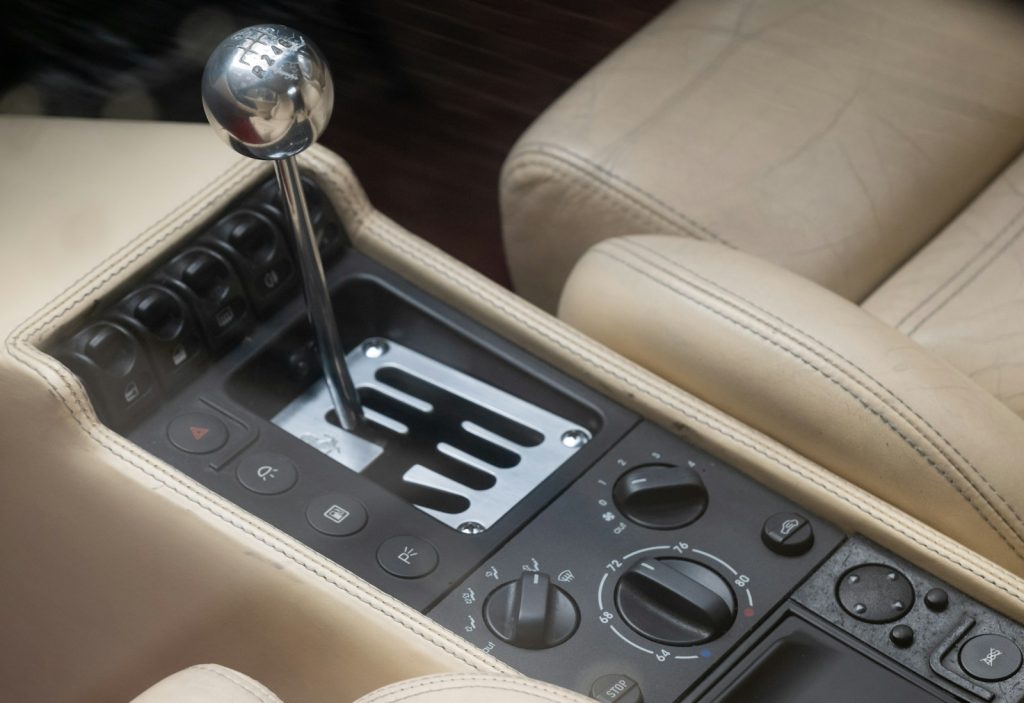
Manual transmissions require the driver to shift gears using a clutch pedal and gear lever.
They are mechanically simple and offer greater driver control.
These systems are often more fuel-efficient and less expensive to maintain.
Clutch replacements typically cost between $600 and $1,200 depending on vehicle type.
Automatic Transmission
Automatic transmissions shift gears without driver input.
They use planetary gear sets and hydraulic controls to manage gear changes.
Modern automatics can have six, eight, or even ten speeds.
This allows smoother acceleration and improved fuel efficiency compared to older designs.
Continuously Variable Transmission (CVT)
CVTs use belts and pulleys instead of fixed gears. This allows seamless acceleration without noticeable gear changes.
While CVTs improve fuel efficiency, they require specialized maintenance.
Repairs can be expensive if the belt system fails.
Dual-Clutch Transmission (DCT)
DCTs combine features of manual and automatic systems.
They use two clutches to pre-select gears, enabling lightning-fast shifts.
These systems are common in performance and luxury vehicles, offering both efficiency and speed.
Also Read: Car Transmission Maintenance Tips
How Power Flows Through the Transmission
Understanding power flow helps visualize how the system operates in real time.
When the engine produces power, it is transferred through the flywheel or torque converter into the transmission.
Inside the gearbox, selected gears adjust torque and speed before sending power to the driveshaft.
The driveshaft then delivers this energy to the differential and wheels.
This entire process happens continuously and seamlessly.
A properly transmission system explained model shows how these transitions occur without noticeable interruption to the driver.
Automatic Transmission Operation in Detail
Automatic transmissions are complex but fascinating systems.
They rely on hydraulic pressure, electronic controls, and mechanical components working together.
Planetary Gear Sets
Planetary gear sets consist of sun gears, planet gears, and ring gears.
By locking different components, various gear ratios are achieved.
This design allows multiple gears within a compact space, making automatic transmissions efficient and versatile.
Valve Body and Solenoids
The valve body directs transmission fluid to different circuits based on driving conditions. Solenoids control fluid flow electronically.
When sensors detect speed or throttle changes, the system adjusts gears accordingly. This results in smooth and responsive shifting.
Control Modules
Modern transmissions use electronic control units (TCUs).
These modules analyze data from multiple sensors to optimize shifting behavior.
Adaptive systems can even learn driving habits and adjust shift patterns over time.
Manual Transmission Operation in Detail
Manual transmissions operate on direct mechanical engagement. The driver plays an active role in gear selection.
When the clutch pedal is pressed, engine power is disconnected. This allows gears to change without grinding.
Releasing the clutch reconnects power smoothly. This mechanical simplicity makes manuals durable and easier to repair.
A detailed transmission system explained approach highlights how driver input directly influences performance and fuel efficiency.
Common Transmission Problems and Warning Signs
Transmission issues often develop gradually. Recognizing early symptoms can prevent major failures.
Common warning signs include:
- Delayed or rough shifting
- Slipping gears
- Burning smells
- Unusual noises during acceleration
Minor issues like low fluid can cost under $150 to fix. Ignoring them may lead to full rebuilds costing $4,000 or more.
Maintenance and Longevity
Proper maintenance significantly extends transmission lifespan.
Clean fluid, proper cooling, and correct driving habits all play a role.
Avoid aggressive acceleration and excessive towing without proper equipment.
Heat is one of the leading causes of transmission failure.
Most transmissions can last over 150,000 miles with proper care.
This reinforces the importance of a practical transmission system explained mindset focused on prevention rather than repair.
Experience from the Field
This article draws insight from years of observing transmission diagnostics and repair processes.
Our team has reviewed service reports, spoken directly with transmission specialists, and monitored real-world failure patterns across different vehicle categories.
One consistent observation is that most transmission failures stem from neglected maintenance rather than design flaws.
We have seen vehicles exceed 200,000 miles on original transmissions simply because owners followed fluid service schedules.
These real-world observations shape the balanced explanations presented here.
Why the Transmission Matters More Than You Think
Many drivers underestimate the transmission’s role until problems arise.
Unlike brakes or tires, transmission issues often remain hidden until performance declines.
A clear transmission system explained perspective helps drivers understand that smooth acceleration, fuel efficiency, and long-term reliability all depend on this system functioning correctly.
In modern vehicles, the transmission also plays a role in emissions control and driving comfort.
Its importance continues to grow as automotive technology evolves.
Conclusion
A vehicle’s transmission is far more than a set of gears. It is a precision-engineered system that manages power, efficiency, and driving comfort across every mile traveled.
Understanding how it works empowers drivers to make informed maintenance and driving decisions.
Through this in-depth transmission system explained guide, readers gain clarity on components, operation, and care.
From manual gearboxes to advanced automatic systems, each design serves a specific purpose.
With proper understanding and maintenance, a transmission can remain reliable for the life of the vehicle.
Knowledge is the most effective tool for preventing costly repairs and ensuring a smooth driving experience for years to come.
Also Read: The Ultimate Car Maintenance Guide